
 Ryken
Ryken
Forget everything you thought you knew about ghost stories. Joanna Hogg’s 2022 film, The Eternal Daughter, certainly isn’t your run-of-the-mill spectral tale. Rather than leaning on cheap jump scares or overt supernatural theatrics, Hogg artfully weaves a profoundly atmospheric and introspective psychological drama. It delves deep into the haunting echoes of yesteryear and the often-tangled dynamics of a mother-daughter bond. This film truly flips the script on conventional genre expectations, pulling viewers headfirst into a world steeped in fog, memory, and unspoken truths.
With the inimitable Tilda Swinton at its heart, delivering a truly remarkable dual performance, the film whisks us away to a remote, aged hotel nestled deep in Wales. This isn’t just any old place; for our protagonists, it’s positively steeped in personal history. It’s a subtle, slow-burn kind of experience that truly asks for your patience, but trust us, it pays off handsomely, proving itself a profoundly resonant cinematic event for anyone who savors nuanced storytelling and character-driven narratives.
Unveiling The Eternal Daughter: A Unique Ghost Story
The Premise: A Mother-Daughter Retreat
At its heart, The Eternal Daughter centers on Julie (Tilda Swinton), a filmmaker, escorting her elderly mother, Rosalind (also played by Tilda Swinton), to a secluded, fog-enshrouded hotel in the wilds of Wales. This isn’t just any destination; this particular hotel positively brims with sentimental value, having once been their family home—a veritable treasure trove of childhood memories for Rosalind.
Julie, ever the artist, harbors hopes that this retreat will offer a chance to truly connect with her mother and, perhaps, collect some fodder for her next film. However, the sheer isolation of the setting and the very air thick with history quickly transform what was meant to be a peaceful escape into a disquieting deep dive into their past and present relationship. Before long, the boundaries between what’s real and what’s merely a memory start to fray at the edges.
Joanna Hogg’s Signature Style
Director Joanna Hogg is known for her knack for a distinctive, observational filmmaking style, often characterized by unhurried long takes, naturalistic dialogue, and a delicate dance between fiction and autobiography. In The Eternal Daughter, she doubles down on this approach, spinning a yarn that feels as personal as your own diary and as intimate as a whispered secret.
Hogg places atmosphere front and center, valuing emotional depth and character introspection rather than getting caught up in typical plot twists or cheap scares. Her method is a masterstroke, letting us sink slowly but surely into the characters’ emotional landscape, and in doing so, she conjures an overarching current of melancholy and unease that is unmistakably her own.
Tilda Swinton’s Dual Performance
What truly knocks your socks off in The Eternal Daughter is Tilda Swinton’s jaw-dropping dual performance as both Julie and her mother, Rosalind. This casting choice, mind you, is far from being just a cinematic parlor trick; it’s a deeply profound artistic decision that truly hammers home the film’s central themes.
Swinton’s uncanny ability to slip effortlessly into two distinct skins, yet subtly weave in the threads of their deep, intertwined connection, is nothing short of mesmerizing. Her nuanced portrayal gives us a front-row seat to the intricate echoes of a mother in her daughter and vice-versa, which, in turn, makes the exploration of their relationship all the more poignant and unsettling.
Baca Juga: The Eternal Daughter Cast: A Deep Dive into the Stars
The Eerie Atmosphere and Setting
The Isolated Welsh Manor
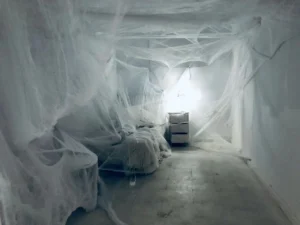
The stage for The Eternal Daughter is set within a grand old dame of a Welsh manor, albeit one a bit past her prime and now operating as a hotel that’s largely a ghost town. This isolation is absolutely vital to the film’s overall mood, as it ratchets up the feeling of being utterly cut off from the outside world, leaving the characters no choice but to face their inner demons.
The hotel itself practically takes on a life of its own, its creaking floorboards, echoing hallways, and decor that time forgot all contributing to an overwhelming cocktail of nostalgia stirred with a quiet, creeping dread. It’s a place where the past feels so palpably present, you could almost reach out and touch it.
Fog-Laden Landscapes and Gothic Vibes
The external environment is a major player in establishing the film’s gothic atmosphere. A persistent, almost suffocating, thick fog frequently blankets the manor and its surrounding grounds, blotting out views and creating an almost claustrophobic sense of being hemmed in. This visual motif doesn’t just deepen the mystery; it also cleverly symbolizes the emotional fog that often clouds our memories and understanding.
These brooding, mist-shrouded landscapes can’t help but call to mind classic gothic literature, whispering of hidden secrets and unseen presences lurking just beyond sight. This aesthetic choice is absolutely fundamental to how the film manages to succeed in building a pervasive sense of unease without ever having to lean on overt horror tropes.
Sound Design: Whispers and Creaks
The sound design in The Eternal Daughter is a masterclass in subtlety, crafted to truly amplify its disquieting ambiance. From distant whispers to unexplained creaks and the gentle rustling of leaves, every subtle sound is put to work conjuring the sense of an unseen presence within the old hotel.
These auditory cues often hit harder than any visual scare ever could, playing on the audience’s imagination and leaving us to wonder what’s real and what’s merely a figment of the characters’ minds. The film’s quietude is frequently punctuated by these small, unnerving details, ratcheting up the psychological tension to a fever pitch.
Baca Juga: Lucy Briers: The Talented Daughter of Richard Briers
Themes of Memory and Grief
Revisiting the Past: A Haunted Childhood Home
At its very core, The Eternal Daughter is a film about the past’s relentless tug. The hotel, once Rosalind’s childhood home, serves as a potent wellspring for memories, both sweet and sorrowful. As Rosalind recounts anecdotes from her youth, Julie tries to pin down these stories, yet finds herself caught in the emotional currents of the place, deeper than she ever intended.
The film posits that certain places can become veritable vaults of emotional history, bearing the full weight of past events and relationships on their shoulders, making them feel quite literally ‘haunted’ by the echoes of what once was.
The Weight of Unspoken Words
A crucial facet of the mother-daughter dynamic explored here is the heavy burden of unspoken feelings and unresolved issues. Both Julie and Rosalind are weighed down by a history of unarticulated emotions that inevitably bubble to the surface during their stay. The quiet moments, more often than not, are absolutely pregnant with meaning, laying bare the deep-seated affections, frustrations, and misunderstandings that have shaped their bond.
The film masterfully illustrates how these unspoken words can fester and brew, hanging heavy over their relationship like a spectral presence, shaping their interactions in ways they might not even realize. It’s a poignant look at how families, for better or worse, navigate the often-rocky waters of communication.
Processing Loss Through Art
Julie’s profession as a filmmaker is far from being just a plot device; indeed, it’s absolutely central to the film’s exploration of grief and memory. She aims to transmute her experiences into art, all the while hoping to gain a deeper understanding of her mother and, by extension, herself. This artistic endeavor morphs into a profound form of catharsis, a means of coming to terms with the inevitable losses and shifts that accompany aging parents.
The very act of storytelling and documentation acts as a powerful mechanism for grappling with profound personal emotions, shedding a unique light on how individuals often turn to creative outlets to stare down their deepest fears and sorrows.
Baca Juga: Filly's Mom: The Heart of Equine Care & Nurturing
The Complex Mother-Daughter Dynamic
Layers of Affection and Resentment
The relationship between Julie and Rosalind is painted with a profound, almost uncomfortable, realism, laying bare the intricate layers of affection, frustration, and the subtle resentments that often simmer between a mother and daughter. While there’s undeniable love, yet a palpable tension often hangs in the air, born from differing perspectives, generational gaps, and old grievances.
The film masterfully steers clear of simplistic, black-and-white portrayals. Instead, it offers up a nuanced bond that hits home for anyone who’s navigated the labyrinth of family relationships. It’s a stark reminder that love can absolutely coexist with annoyance, and that sometimes, true, deep understanding can remain just a hair’s breadth out of reach.
Seeking Connection and Understanding
Throughout their stay, both women, each in her own way, are reaching for a deeper connection and a meeting of minds. Julie longs to see her mother more clearly, beyond the confines of “mother,” while Rosalind grapples with her own fading identity and the ever-evolving nature of her relationship with her fiercely independent daughter.
Their conversations, though often mundane on the surface, are imbued with an unspoken quest for empathy and validation. This search for connection is truly the emotional backbone of The Eternal Daughter, making us keenly aware of the universal human yearning to be truly seen and understood by those we hold dear.
The Cyclical Nature of Relationships
The Eternal Daughter quietly posits a cyclical nature to mother-daughter relationships, where daughters often find themselves mirroring or even reliving aspects of their mothers’ lives. Swinton’s dual role powerfully drives this idea home, visually fusing the two women in a way that goes far beyond mere resemblance.
The film delves into how our parents’ pasts, their lived experiences, and their very identities inevitably cast a long shadow over our own, forging an ‘eternal’ thread that firmly binds generations. This theme adds a profound layer to the film’s already considerable psychological depth, a subtle nod to the enduring, often inescapable, influence of lineage.
Baca Juga: Congressman Frost Punched at Sundance Party, Suspect Arrested
The Subtle Art of Horror in The Eternal Daughter
Psychological Dread Over Jump Scares
Unlike conventional horror films, The Eternal Daughter tosses cheap jump scares aside in favor of cultivating an insidious sense of psychological dread. The horror doesn’t spring from external threats, but rather from internal anxieties, the sheer weight of memory, and the unnerving feeling of an unseen presence, one that may or may not be supernatural.
Hogg crafts an atmosphere where the audience is left to perpetually question what’s real, what’s imagined, and what’s simply the manifestation of deep-seated emotions bubbling to the surface. This nuanced approach makes the film infinitely more unsettling on a subconscious level, getting right under your skin.
The Unseen Presence
The film is a master at hinting at a haunting presence without ever truly showing its hand. The ‘ghost’ in The Eternal Daughter is less a corporeal entity and more a potent embodiment of grief, memory, and the lingering spirit of the past itself. It makes itself known through subtle sounds, fleeting shadows, and the characters’ own internal struggles.
This ambiguity is absolutely key to its effectiveness, leaving the audience’s imagination free to fill in the blanks. And often, what we conjure in our minds is far more terrifying than any visual effect could ever hope to achieve. The true horror, then, lies squarely in the unknown and the psychological toll it takes.
Emotional Resonance as the True Chill
Ultimately, the real kicker, the most chilling aspect of The Eternal Daughter, is its profound emotional resonance, which cuts right to the bone. The sheer sense of isolation, the uphill struggle to communicate, and the act of staring down one’s own mortality through the undeniable lens of a parent’s aging are deeply unsettling themes that strike a chord with universal human fears.
Its knack for evoking empathy and introspection makes its subtle scares infinitely more impactful. The true chill stems from recognizing the universal truths about family, memory, and loss that are so deftly woven into its very fabric.
Baca Juga: Savannah Guthrie's Family: Is There a Son-in-Law?
Hogg’s Autobiographical Touch
Drawing from Personal Experiences
Joanna Hogg has a habit of infusing her films with elements plucked straight from her own life and experiences, and The Eternal Daughter is certainly no exception to this rule. The filmmaker character, Julie, can easily be seen as a stand-in for Hogg herself, delving into themes and situations that undoubtedly resonate with her personal journey and artistic process.
This autobiographical approach lends an almost breathtaking authenticity and raw vulnerability to the narrative, paving the way for a raw and unflinchingly honest portrayal of the complex interplay between a creative individual and their deep-seated family history.
The Filmmaker’s Reflection
The meta-narrative of Julie attempting to make a film about her mother doubles as a powerful reflection on the act of filmmaking itself. It peels back the layers on the challenges of capturing truth, the ethical tightrope walk of using personal stories, and the often-blurred lines that separate observation from interpretation.
Hogg masterfully uses Julie’s struggle to underscore the inherent difficulties and the emotional toll of transforming raw, lived experience into art, adding yet another layer of depth to the film’s exploration of identity and memory.
Authenticity in Storytelling
The autobiographical elements are a massive contributor to the film’s overall sense of authenticity. By anchoring the narrative in genuine emotional experiences, Hogg creates a story that feels profoundly real, even with its spectral undertones swirling about. This unwavering commitment to honesty cultivates a deeper connection between the audience and the characters.
It’s a true testament to Hogg’s remarkable skill that she can weave such deeply personal threads into a narrative that hits home universally, speaking volumes to the shared human experience of family bonds and the relentless passage of time.
Baca Juga: Elizabeth Smart's Mom: Lois Smart's Strength & Legacy
Critical Reception and Audience Impact
Acclaim for Swinton’s Performance
Upon its release, The Eternal Daughter was met with widespread critical acclaim, right out of the gate, especially for Tilda Swinton’s utterly mesmerizing dual performance. Critics couldn’t stop raving about her ability to inhabit both roles with such distinctiveness and emotional depth, calling it, quite rightly, a masterclass in acting.
Her portrayal was frequently singled out as the lynchpin of the film’s emotional power, taking the already nuanced script and direction to dizzying new heights. Swinton’s work here only further cemented her reputation as one of the most versatile and compelling actors working today.
A Divisive Yet Thought-Provoking Film
While many sang its praises, The Eternal Daughter also proved to be a bit of a polarizing film for audiences, especially for those who went in expecting a more conventional horror experience, full of bells and whistles. Its unhurried pace, subtle scares, and keen emphasis on psychological exploration meant it simply wasn’t everyone’s cup of tea.
But even those who found it a tough nut to crack often acknowledged its profound artistry and genuinely thought-provoking themes. The film sparked lively conversations about genre conventions, the very nature of grief, and the intricate complexities of family, thus solidifying its place as a truly significant work in contemporary cinema.
Leaving a Lasting Impression
Regardless of immediate reactions, The Eternal Daughter is one of those films that’s absolutely designed to stick with you. Its atmospheric beauty, profound emotional depth, and unique storytelling tend to linger long after the credits have rolled. It quietly encourages introspection and a re-evaluation of personal relationships and cherished memories.
For those who appreciate cinema that challenges your perceptions, provokes your thoughts, and deeply moves your soul, Joanna Hogg’s “The Eternal Daughter” stands as a powerful testament to the potency of subtle, character-driven filmmaking. It’s a film that will truly get under your skin and haunt you, not with cheap thrills, but with the quiet, persistent echoes of life itself.
Baca Juga: Arman Tsarukyan Net Worth: Unveiling the Fighter's Riches
Conclusion
The Eternal Daughter is a truly masterful and utterly unconventional ghost story that effortlessly transcends typical genre boundaries. Joanna Hogg, with her signature observational style, brings to the screen a deeply personal and atmospheric film that truly delves into the intricate tapestry of memory, grief, and the enduring bond between a mother and daughter. Tilda Swinton’s dual performance is nothing short of extraordinary, firmly anchoring the film with profound emotional authenticity and technical brilliance that’s a joy to behold.
The film’s true strength lies in its uncanny ability to build psychological dread through subtle cues, rather than relying on overt scares. It masterfully leverages its isolated setting, evocative sound design, and fog-laden landscapes to conjure a pervasive sense of unease. It’s a deeply reflective journey into the past, shining a light on how our origins continue to shape our present and, indeed, our future, and how the spirits of our loved ones, whether they’re still with us or have passed on, forever reside within the very fabric of who we are.
Ultimately, The Eternal Daughter stands as a poignant exploration of family, identity, and the profound process of coming to terms with loss. It’s a film that demands your patience and richly rewards contemplation, offering a rich, layered cinematic experience that will undoubtedly resonate deeply with viewers who appreciate a thought-provoking drama and the quiet, undeniable power of human connection.
FAQ
"The Eternal Daughter" is a psychological ghost story centered on a filmmaker, Julie, who takes her elderly mother, Rosalind, to a remote hotel that was once their family home. While there, Julie tries to connect with her mother and gather some material for a new film, but they both find themselves face-to-face with unsettling memories and a mysterious presence within the old manor.
The film stars Tilda Swinton in a truly remarkable dual role, playing both the daughter, Julie, and her mother, Rosalind. She is the main actor in the film, with a handful of supporting roles from other actors.
It's less a conventionally "scary" movie that relies on jump scares and more a psychological horror or ghost story that builds its dread through atmosphere, suspense, and raw emotional themes. Its unsettling nature truly stems from its exploration of grief, memory, and the unseen, rather than from explicit horror elements.
The film comfortably sits in the categories of psychological drama, ghost story, or a slow-burn horror film. It cleverly blends elements from these genres to forge a unique and deeply introspective cinematic experience.
"The Eternal Daughter" was shot on location in beautiful Wales, primarily at the historic Plas Newydd country house, which, by the way, was the perfect stand-in for the isolated hotel in the movie. The natural, often fog-shrouded Welsh landscape plays a huge role in establishing the film's atmosphere.